
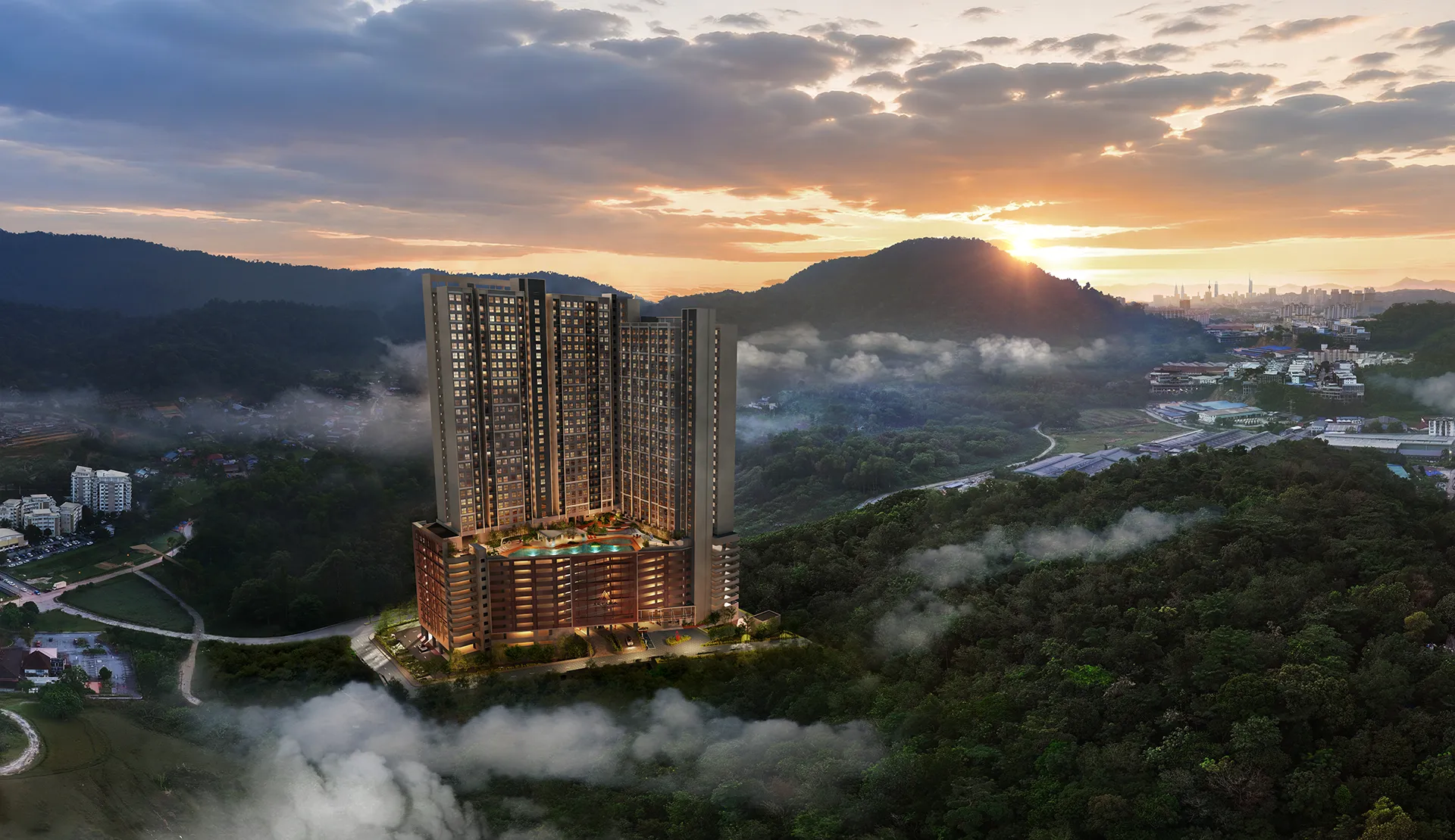
What makes a retail location attractive is not simply the number of people living nearby. It is the combination of a growing catchment, spending power and convenient access to everyday businesses.
For this development along Jalan Hospital, there is an additional advantage: 652 residential units will sit directly above the retail component, creating a built-in customer base alongside the wider Sungai Buloh market.
The development’s most immediate source of retail demand will be the residents living within it.
With 652 residential units positioned above the retail, businesses will have a potential customer base just steps away from their premises. This is particularly relevant for businesses that depend on frequent, convenience-driven purchases rather than occasional destination visits.
Food and beverage outlets, convenience stores, pharmacies, salons, laundry services and other everyday businesses can potentially benefit from residents who live within the same development.
The retail component therefore does not have to rely entirely on attracting customers from elsewhere. It will have an established residential population on its doorstep as the development becomes occupied.
The wider Sungai Buloh market provides another layer of potential demand. According to DOSM’s 2020 Census, Pekan Baru Sungai Buloh had 124,122 residents in 2020, compared with 101,360 in 2010. This represents an increase of more than 22,700 residents, or approximately 22% over the decade. DOSM also recorded 32,154 households in 2020, compared with 26,874 in 2010.
At the broader parliamentary constituency level, P.107 Sungai Buloh had a population of 347,092 in 2020, with 72.5% of the population within working age.
These figures point to a substantial surrounding residential market, giving businesses within the development the opportunity to serve customers beyond its own 652 residential units.
Population alone does not tell the whole story. For retailers, the amount households earn and spend is equally important.
The latest DOSM household income data shows that Selangor recorded a median monthly household income of RM10,726 and mean monthly household income of RM13,296 in 2024. Mean monthly household consumption expenditure in Selangor was also above the national level.
At the local constituency level, DOSM’s P.107 Sungai Buloh data provides further insight into the area’s economic profile. These figures are based on survey estimates and should be read as an indication of the wider constituency rather than a direct projection of spending by the project’s future residents.
Together, the population and household data provide context for the commercial opportunity: Sungai Buloh is not simply a large residential market, but one with an established base of households generating recurring consumption demand.
The combination of an internal residential population and a wider surrounding catchment is particularly relevant to businesses serving everyday needs.
The commercial opportunity can therefore be viewed through two complementary catchments.
This combination means retailers can potentially serve both residents who prioritise convenience and customers who live, work or spend time in the surrounding area.
A successful neighbourhood retail environment does not necessarily need to become a major destination. It can instead become part of the daily routine of the people around it.
For this development, that daily demand begins with the 652 residential units above the retail, while the growing Sungai Buloh catchment provides a broader pool of potential customers.
The opportunity along Jalan Hospital is therefore built on both proximity and scale: a customer base within the development itself, supported by a sizeable and growing surrounding market.
For businesses considering the location, the proposition is straightforward: serve the residents upstairs, while remaining accessible to the wider Sungai Buloh community.